
Buying Guides, Lineman Shirts
Best Lineman Shirts for Work: Durable, Comfortable & Practical Picks
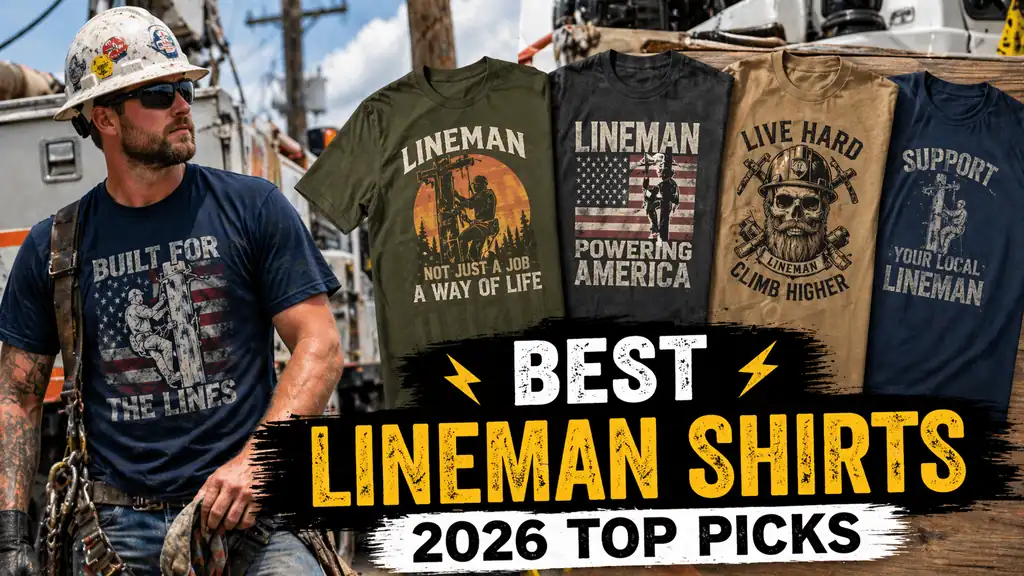
Apr
The right shirt should move with you, hold up after repeated washes, and stay comfortable through heat, sweat, and physical work. Whether you prefer plain work tees or graphic designs that reflect trade identity, the goal is the same: something that works as hard as you do.
Best lineman shirts for work are durable cotton tees with breathable fabric, a relaxed fit for movement, and long-lasting print that can handle outdoor jobsite conditions without breaking down over time.
The best lineman shirts for work are durable cotton tees with breathable fabric, a relaxed fit for movement, and long-lasting print that can handle outdoor jobsite conditions without breaking down over time. Choosing the right one depends on your work intensity, weather conditions, and how often you rotate shirts.
What Makes the Best Lineman Shirts for Work
The best lineman shirts are built around one simple idea: they need to survive real work, not just look good online. That means handling movement, friction, sweat, and repeated washing without losing structure or comfort.
On a real jobsite, shirts get tested fast. Between climbing poles, handling equipment, and working in heat or wind, weak fabric or poor fit becomes obvious within days. That’s why experienced linemen tend to stick with shirts that feel broken-in but don’t break down.
A solid work shirt usually starts with heavyweight cotton. Around 5.3 oz fabric hits the sweet spot—it’s thick enough to feel durable but still breathable during long outdoor shifts. Lighter shirts may feel soft at first but often wear out quickly under real use.
Fit matters just as much. A good lineman shirt shouldn’t be tight or restrictive. You need room through the shoulders and arms, especially when reaching or climbing. At the same time, it shouldn’t hang so loose that it gets in the way of your work.
Another factor people overlook is how the shirt handles sweat and repeated washing. Cheap materials tend to lose shape fast. Better shirts keep structure after multiple cycles and don’t twist or shrink unpredictably.
If you want a clear starting point, exploring a full range of options in the core lineman shirt collection helps you quickly see what separates work-ready apparel from generic tees.
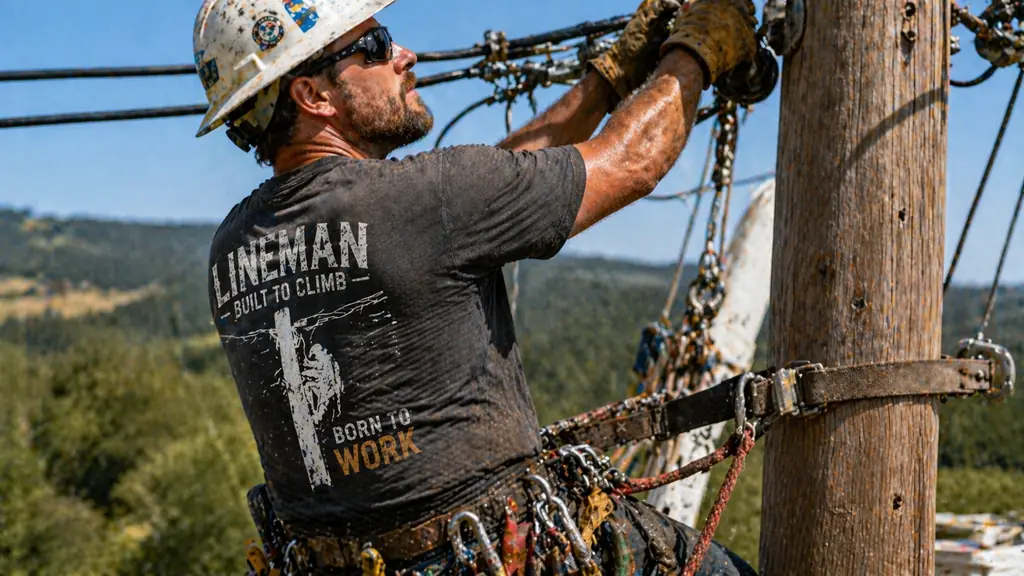
Top Lineman Shirts for Work
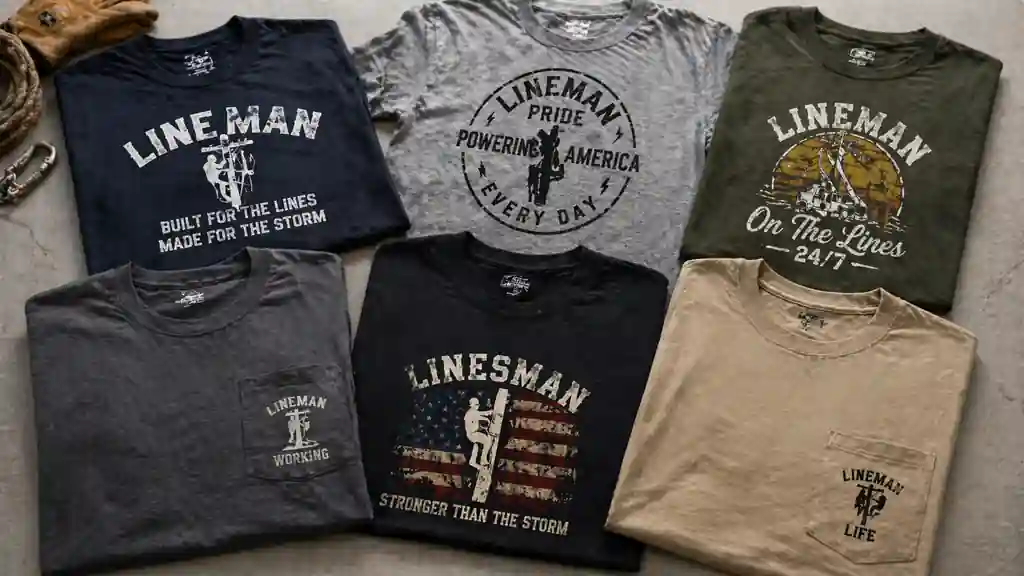
These are the categories most commonly associated with the best lineman shirts used in real jobsite conditions.
When people search for the best lineman shirts, they’re not just browsing—they’re trying to make a decision. The categories below reflect what actually works in the field, not just what looks good in product photos.
- Heavyweight Cotton Work Shirts – Best for daily jobsite use. Durable, reliable, and built to handle repeated wear.
- Breathable Work Shirts – Better for hot climates where airflow matters without sacrificing structure.
- Graphic Lineman Shirts – Ideal for off-duty or lighter tasks, especially when built on quality blanks.
- Layering Base Shirts – Designed to work under hoodies or jackets in colder conditions.
The difference between these isn’t just style—it’s function. A shirt that works well in one situation may not perform the same in another. That’s why understanding use case is more important than chasing a single “best” option.
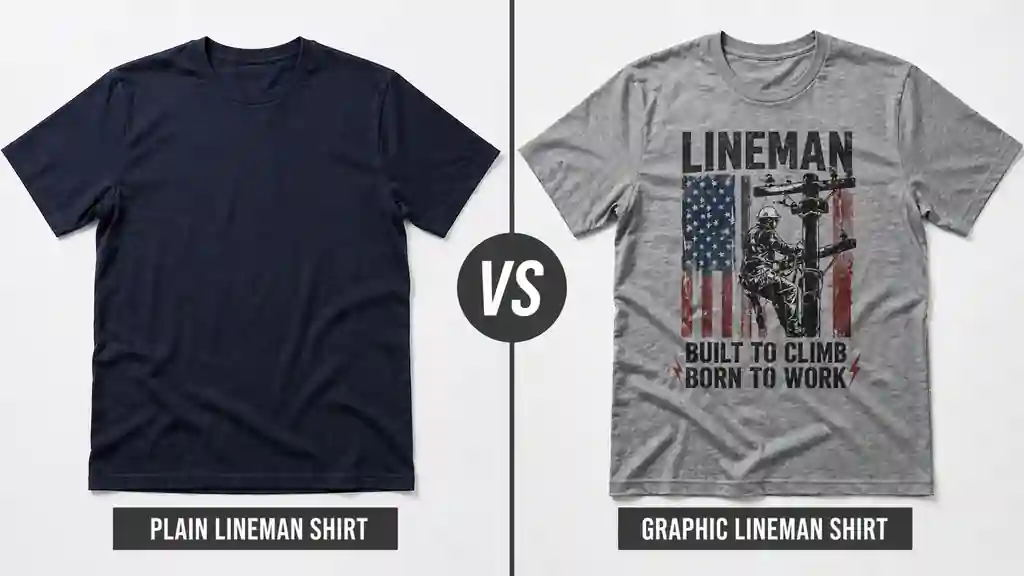
Work vs Graphic Lineman Shirts: What Actually Works
One of the most common questions is whether graphic shirts are suitable for work. The short answer: sometimes—but only if they’re made right.
Plain work shirts are still the safest choice for heavy-duty days. They’re simple, durable, and designed purely for function. When your job involves constant movement, friction, and outdoor exposure, simplicity usually wins.
Graphic lineman shirts bring something different. They represent trade identity—humor, pride, and experience. But not all prints are equal. Low-quality prints crack, peel, or feel stiff after a few washes.
Higher-quality prints like DIGISOFT® offer a softer feel, better durability, and reduced cracking compared to plastisol. That means you can wear them longer without sacrificing comfort.
If you’re looking for designs that balance personality with usability, options like humor-driven lineman shirts are worth exploring—especially for off-duty wear or lighter workloads.
Most linemen follow a simple rule: plain shirts for heavy work, graphic shirts for everything else. That balance keeps both types lasting longer.
At VoltShirts, the focus is always on balancing real workwear performance with trade identity—so shirts don’t just look right, they feel right on the job.
Best Lineman Shirts for Work by Use Case (Quick Picks)
If you’re not trying to overthink it, the easiest way to choose the best lineman shirts is to match the shirt to how you actually work. Different conditions demand different priorities.
- Best for heavy-duty daily work: heavyweight cotton shirts with a relaxed fit and reinforced stitching
- Best for hot weather: breathable cotton shirts that still maintain structure under sweat
- Best for long-term durability: shirts with consistent fabric density and shape retention after washing
- Best graphic option: high-quality prints with soft-hand feel and reduced cracking
This kind of breakdown removes guesswork. Instead of searching for one perfect shirt, you’re choosing the right tool for the job.
Fabric, Fit & Durability Explained
If you want the best lineman shirts for work, fabric is where the real decision starts. A shirt can look solid online but fail after a few tough shifts if the material isn’t built for real use.
Heavyweight cotton remains the most reliable option. It offers structure without sacrificing comfort and holds up better under repeated stress. Shirts that are too light often feel great initially but lose shape quickly.
Construction matters too. Taped necks, reinforced seams, and consistent stitching help maintain shape over time. These details aren’t flashy, but they’re what separate durable shirts from disposable ones.
Print quality plays a role as well. A stiff print often cracks or becomes uncomfortable. Softer, high-definition prints maintain flexibility and last longer through repeated washing.
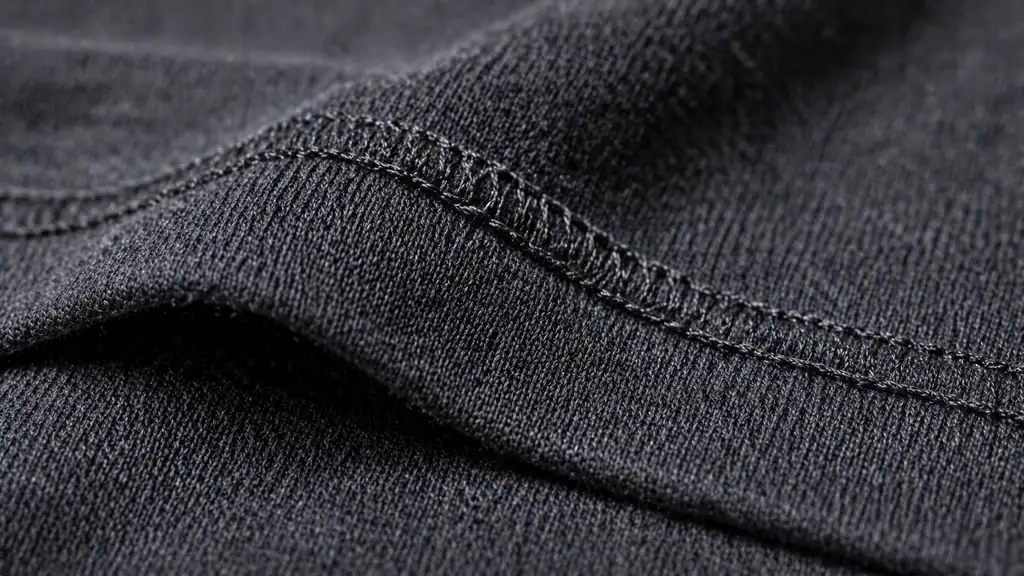
There’s also a practical difference between a shirt that feels good for an hour and one that still feels good after a full shift. That’s where material weight and construction work together. A reliable shirt needs enough body to avoid feeling flimsy, but it also needs enough comfort to stay wearable when the day gets long.
For most buyers, this is where the best lineman shirts separate themselves from generic tees. You’re not just paying for a design—you’re paying for fabric stability, predictable fit, and a shirt that doesn’t lose its usefulness after a few washes.
Another point worth understanding is shape retention. If a shirt starts twisting, stretching through the neck, or losing its shoulder line quickly, it becomes annoying to wear even before it fully wears out. That’s why taped neck and shoulder construction matters more than people think in workwear-focused apparel.
When comparing options, it helps to judge durability in three layers: fabric weight, seam quality, and print feel. If all three are solid, the shirt usually has a much better chance of holding up in real use.
Common Mistakes When Buying Lineman Shirts
- Prioritizing design over function – Looks don’t equal durability.
- Choosing thin fabric – Comfort doesn’t mean lightweight.
- Ignoring fit – Movement matters more than style.
- Buying cheapest option – Often leads to faster replacement.
- Not rotating shirts – Shortens lifespan significantly.
These mistakes come from treating workwear like casual clothing. The best lineman shirts are chosen differently—they’re judged by performance, not just appearance.
Another mistake is assuming all work shirts should feel the same. Some are better suited to peak summer conditions, while others make more sense as dependable year-round staples. That doesn’t mean you need a huge wardrobe, but it does mean you should think in terms of use case instead of one-size-fits-all buying.
Buyers also overvalue first-touch softness. A shirt that feels extremely soft on day one may not be the best long-term choice if the fabric is too light to handle friction, washing, and repeated outdoor use. In workwear, immediate softness is less important than stable comfort over time.
One more common problem is buying based on a broad “best of” roundup without checking whether the recommendations actually make sense for linework culture. Generic lists often focus on casual lifestyle shirts instead of shirts that can realistically fit into a work-heavy routine.
How to Choose the Right Shirt for Your Job
Instead of searching for one perfect option, think in terms of use cases.
Heavy-duty work
Choose structured cotton shirts with durability first.
Hot weather
Focus on breathable materials that still hold shape.
Casual / off-duty
Graphic shirts add identity without sacrificing comfort.
Gift buying
Stick to versatile designs and reliable fits.
For deeper comfort-focused options, you can explore this breakdown of lineman shirt comfort factors, which explains what makes shirts wearable for long shifts.
If you want to make the decision even easier, think about your week instead of thinking about one shirt. Ask yourself how many days involve heavy outdoor work, how often you deal with heat, and whether you want some shirts reserved for casual wear. That usually gives you a much clearer buying framework.
For example, someone doing repeated heavy-duty outdoor work will usually benefit more from a rotation built around structured heavyweight cotton. Someone who wants trade identity pieces for off-hours may value graphic options more. Both are valid—but they serve different roles.
This is also why the best lineman shirts for work are rarely defined by trend alone. Trend can influence design, but function still decides whether the shirt earns a place in your regular rotation.
Real Jobsite Conditions: What Shirts Actually Go Through
Lineman shirts deal with more than just wear—they deal with constant stress. Climbing, lifting, and outdoor exposure quickly reveal weak points in fabric and construction.
Friction from equipment, sweat, and repeated washing all contribute to wear. That’s why shirts designed for casual use often fail in work environments.
Durable shirts maintain structure, resist twisting, and stay comfortable even after multiple wash cycles. That’s the real difference between workwear and standard apparel.
It also helps to remember that shirts experience different kinds of pressure depending on the day. Some days test movement and shoulder mobility. Other days test heat tolerance, layering comfort, or how well the shirt keeps its shape after a long shift. A dependable work shirt needs to handle all of that without becoming distracting.
That’s why the best lineman shirts are usually the ones you stop noticing once the work starts. They don’t cling, bind, sag, or become irritating halfway through the day. They simply do their job in the background.
Why Rotation Matters More Than Finding One Perfect Shirt
A lot of buyers waste time trying to find one shirt that can do everything. In practice, a small rotation works better. It spreads out wear, gives you flexibility across changing conditions, and helps each shirt last longer.
A simple rotation might include two or three reliable plain shirts for heavier work, one or two breathable options for hotter days, and one or two graphic shirts for off-duty use or lighter tasks. That setup is usually more practical than expecting a single shirt to cover every need.
This is one of the smartest ways to buy the best lineman shirts without overbuying. You don’t need a huge collection. You just need the right mix.
Weather, Layering & Year-Round Use
Weather changes how shirts perform. In hotter conditions, airflow and comfort matter more. In cooler weather, shirts need to layer cleanly under hoodies or jackets without bunching up or restricting movement.
A shirt that works well year-round usually has enough structure to stay stable when layered, but enough comfort to remain wearable on its own. That balance is one reason heavyweight cotton continues to perform well in trade apparel—it works in more than one season.
When buyers ignore weather, they often end up with shirts that feel good only in one narrow set of conditions. A better approach is choosing shirts that fit your actual work environment, not an idealized one.
If you want to compare your options with a broader buying-angle roundup, reviewing this updated guide to best lineman shirts can help you see how current picks line up with comfort, durability, and trade identity.
Build a Better Rotation
If you’re trying to improve your setup, don’t rely on one shirt. Build a small rotation instead. A few dependable work shirts combined with one or two graphic options gives you better flexibility and longer-lasting wear.
At the end of the day, the best lineman shirts are the ones that continue to perform after real use, not just initial wear.
Final Thoughts: What the Best Lineman Shirts Really Get Right
The best lineman shirts for work usually get the basics right before anything else. They prioritize comfort that lasts, fabric that holds its shape, and fit that supports movement instead of fighting it. Once those are in place, design becomes a bonus rather than a compromise.
That’s the real buying standard. Not whether the shirt looks impressive in a product image, but whether it continues to feel dependable after real wear, real washing, and real work.
If you buy with that mindset, you’ll make better decisions, avoid disposable options, and build a rotation that actually works.
Frequently Asked Questions
What shirts do linemen wear for work?
Most linemen wear durable cotton shirts with a relaxed fit that allow full movement and hold up under repeated outdoor use. The best lineman shirts for work are typically heavyweight cotton tees designed to handle long hours, friction, and frequent washing without losing shape.
Are graphic lineman shirts good for work?
Graphic lineman shirts can be suitable for work if they use high-quality fabric and durable print methods. However, many workers prefer plain shirts for heavy-duty days and use graphic shirts for lighter tasks or off-duty wear to extend their lifespan.
What material is best for lineman shirts?
Heavyweight cotton is widely considered the best material for lineman shirts because it balances durability, breathability, and comfort. It holds up well under jobsite conditions and performs better over time compared to thinner or fashion-focused fabrics.
How many shirts should I own?
A practical rotation of 4–6 shirts is ideal for most workers. This allows you to alternate between heavy-duty work shirts and lighter or graphic options, helping each shirt last longer while maintaining comfort throughout the week.
Are lineman shirts good gifts?
Yes, lineman shirts are one of the most practical and reliable gift options. The best lineman shirts combine everyday comfort with trade identity, making them useful for both work and casual wear without requiring detailed sizing or technical knowledge.
What are the best lineman shirts for everyday work?
The best lineman shirts for everyday work are durable, breathable cotton tees with a relaxed fit and strong stitching. They should handle repeated wear, washing, and movement without losing comfort or structure.
More in Buying Guides
Shop Lineman ShirtsBest Lineman Shirts 2026 for Work, Pride, and Everyday Wear
The best lineman shirts 2026 shoppers should look for are comfortable, trade-specific, and built around real lineworker identity....
Read articleComfortable Lineman Shirts: What Actually Feels Good to Wear
Comfortable lineman shirts are designed for all-day wear, combining soft fabric, a relaxed fit, and flexible prints that...
Read articleComplete Guide to Lineman Shirts: Workwear, Style, Gifts & Real-World Use
Lineman shirts are more than just clothing. They represent a trade built on risk, skill, and pride. Whether...
Read articleLooking for more from this collection?
Shop Lineman Shirts