
Workwear & Trade Culture, High Voltage Shirts
High Voltage Meaning: What the Warning Really Signals
Apr
High voltage meaning refers to electrical energy powerful enough to create serious shock, burn, arc, or equipment hazards. The exact threshold depends on the technical standard or setting, but in everyday warning language, high voltage tells people that electricity is strong enough to require caution, distance, and controlled handling.
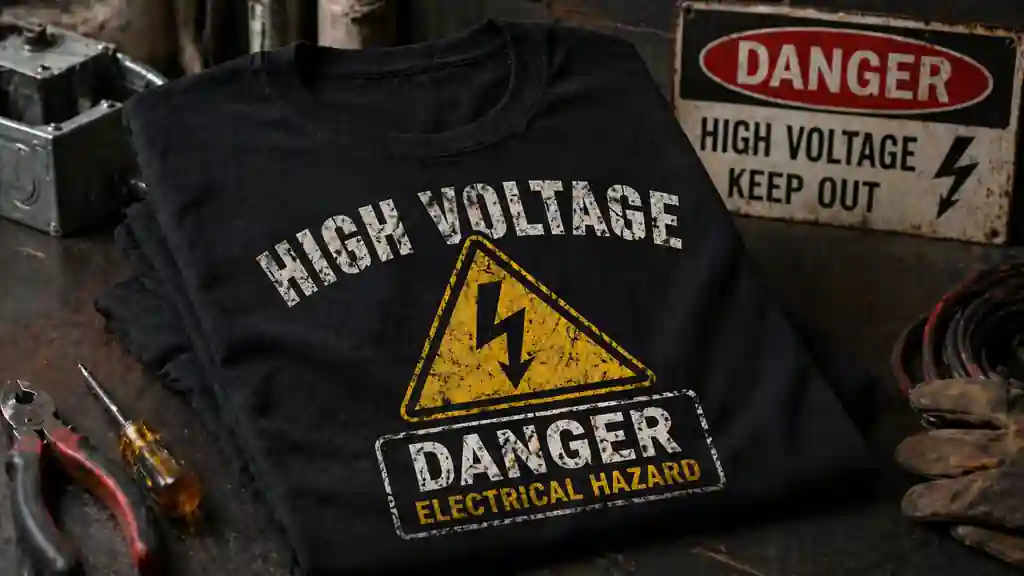
The phrase “high voltage” shows up on warning signs, electrical labels, industrial graphics, jobsite visuals, and trade-inspired shirts because it sends a message quickly. It does not need much explanation to feel serious. A lightning bolt, bold warning text, or hazard-style layout already tells people that the situation involves electrical power that should not be treated casually.
This article explains what high voltage means, why the phrase is used in warning language, how it differs from lower-voltage or general electrical labels, and why high voltage graphics became such a strong visual theme in trade apparel.
What Does High Voltage Mean?
High voltage generally means an electrical potential high enough to present serious risk if handled incorrectly. In technical fields, the exact number can vary depending on the standard, environment, equipment, and use case. That is why high voltage should not be reduced to one simple universal number in a general article.
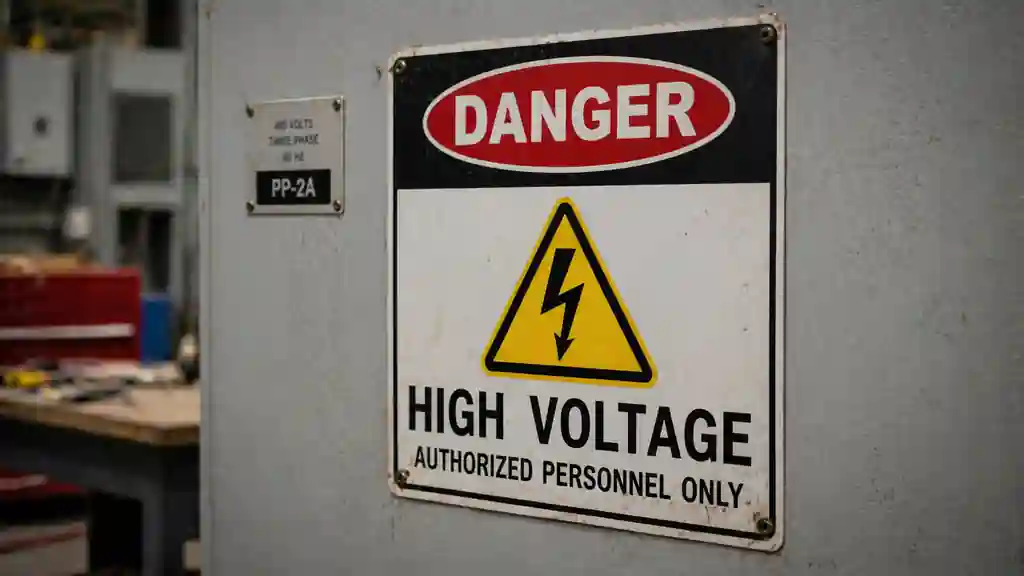
For everyday readers, the more useful explanation is this: high voltage signals caution. It tells people that the electrical energy involved can be dangerous, especially without proper training, equipment, and controlled conditions.
That matters because the phrase is not just technical language. It is also warning language. When someone sees a high voltage label on equipment, a utility area, or an industrial sign, the message is immediate: do not touch, do not guess, and do not treat it like ordinary household electricity.
VoltShirts uses this kind of warning language carefully in visual apparel because it has strong trade recognition. The goal is not to make safety claims. The goal is to reflect the bold, industrial look connected to electrical work, skilled trades, and jobsite culture.
Key Things High Voltage Usually Signals
When people search for the meaning, they are often trying to understand what the phrase actually warns about. The answer depends on context, but high voltage usually points to several serious ideas.
- Electrical shock risk: Contact with high-voltage systems can be extremely dangerous.
- Arc or flash potential: Higher electrical energy can create serious hazards under the wrong conditions.
- Controlled access: High-voltage areas are usually meant for trained people, not casual handling.
- Warning visibility: Signs and labels use bold visuals so people recognize the danger quickly.
- Industrial identity: The phrase has become part of the visual language of electrical work and skilled trades.
This is also why the phrase works so well visually. It carries seriousness, energy, and instant recognition. For readers who want to see that visual language translated into apparel, the broader high voltage shirts collection shows how warning-inspired graphics can support trade identity without pretending to be safety equipment.
High Voltage vs Low Voltage vs Electrical Hazard
High voltage is not the same as all electricity. Lower-voltage systems can still be important, useful, or even dangerous in the wrong situation, but the phrase high voltage usually carries a stronger warning signal. It suggests a higher level of electrical energy and a greater need for caution.
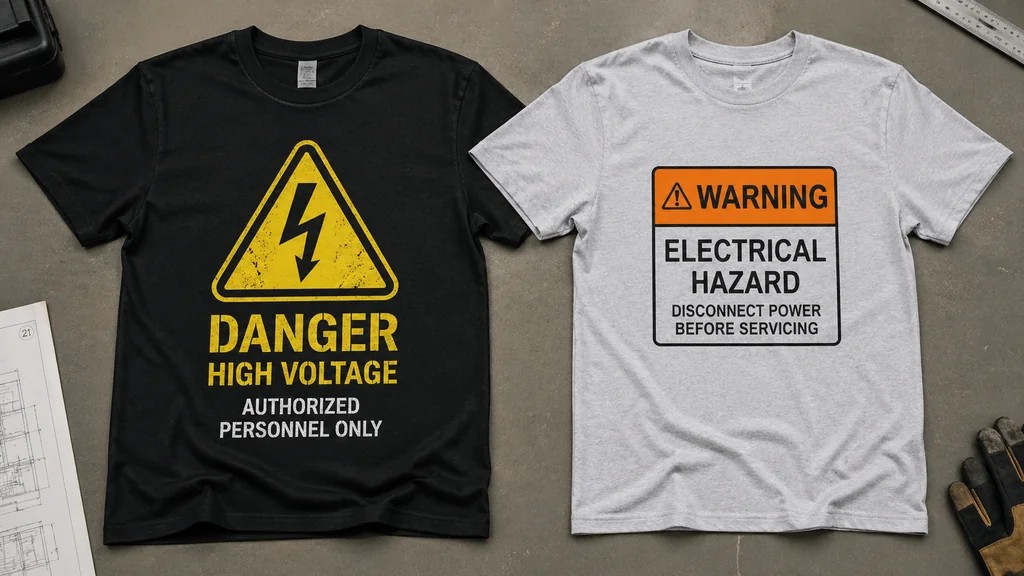
Low voltage is often used for systems with less electrical potential, such as certain controls, communications, lighting, or smaller electrical applications. That does not mean it should be ignored. Electrical work should still be treated with respect. But the warning intensity is usually different.
An electrical hazard is broader. It can describe many types of risk: shock, exposed wiring, improper grounding, damaged equipment, unsafe installation, or other jobsite concerns. High voltage is one possible hazard, but not every electrical hazard is specifically high voltage.
That difference matters for both meaning and visual design. A general electrical warning can be broad. A high-voltage warning feels more intense, more direct, and more instantly recognizable. That is why lightning symbols, hazard triangles, and bold caution-style layouts often appear around this phrase.
For apparel, the distinction is important. A high-voltage shirt is graphic apparel inspired by electrical warning culture. It is not personal protective equipment, and it should never be treated as a substitute for safety gear. The design language borrows from warning signs, but the product role is identity, style, and trade culture.
Why High Voltage Warning Signs Use Bold Visuals
Warning signs have to work fast. People do not always stop to read long explanations, especially in industrial or work-adjacent environments. That is why high voltage signs rely on simple shapes, strong contrast, and familiar symbols.
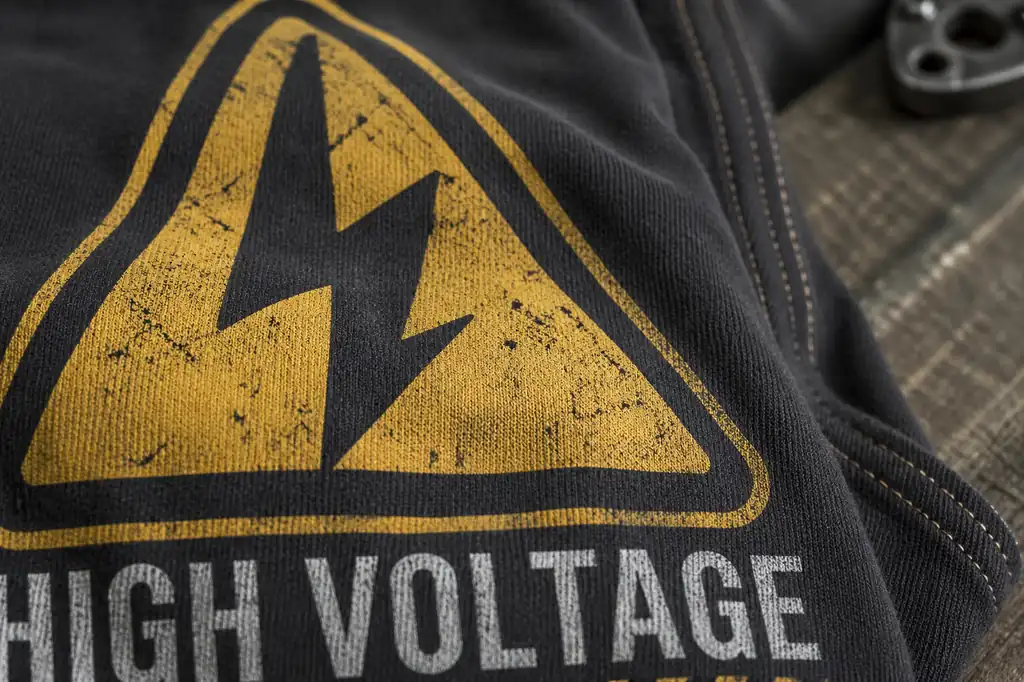
The lightning bolt is one of the clearest examples. It instantly suggests electrical energy. Hazard triangles, caution-style borders, and bold uppercase lettering create a visual signal that feels urgent even before someone reads the full message.
This is why electrical hazard graphics are powerful. They do not depend on decoration. They depend on recognition. A strong warning-style design feels direct because it borrows from signs people already associate with danger, power, and controlled access.
In trade apparel, that recognition becomes part of the design language. A shirt using electrical hazard styling can feel bold without needing a complicated illustration. The best versions keep the graphic clean, readable, and grounded in real industrial cues instead of fake sparks or overdone effects.
For shoppers interested in the hazard-symbol side of the niche, electrical hazard shirt styles are the closest subcategory because they focus on warning-inspired graphics and caution-based visual identity.
Is High Voltage Always Dangerous?
High voltage should always be treated seriously, but the level of danger depends on the system, environment, exposure, distance, training, and protective controls. The safest general answer is simple: if something is labeled high voltage, do not assume it is safe to touch or approach without proper knowledge.
That does not mean every use of the phrase in culture or design is an active danger. On a shirt, poster, or graphic tee, high voltage is visual language. It suggests intensity, power, and electrical identity. On real equipment, it is a warning. The context changes the function.
This difference is critical for VoltShirts content. High voltage graphics can look strong and trade-aware, but shirts are not safety tools. They are apparel inspired by electrical work, industrial signs, and skilled worker culture.
Why High Voltage Became a Strong Shirt Design Theme
High voltage became a strong shirt design theme because the phrase is short, powerful, and instantly visual. It carries the feeling of electrical energy without needing a long explanation. For electricians, linemen, industrial workers, and skilled tradespeople, that kind of language connects directly to work environments where power is taken seriously.
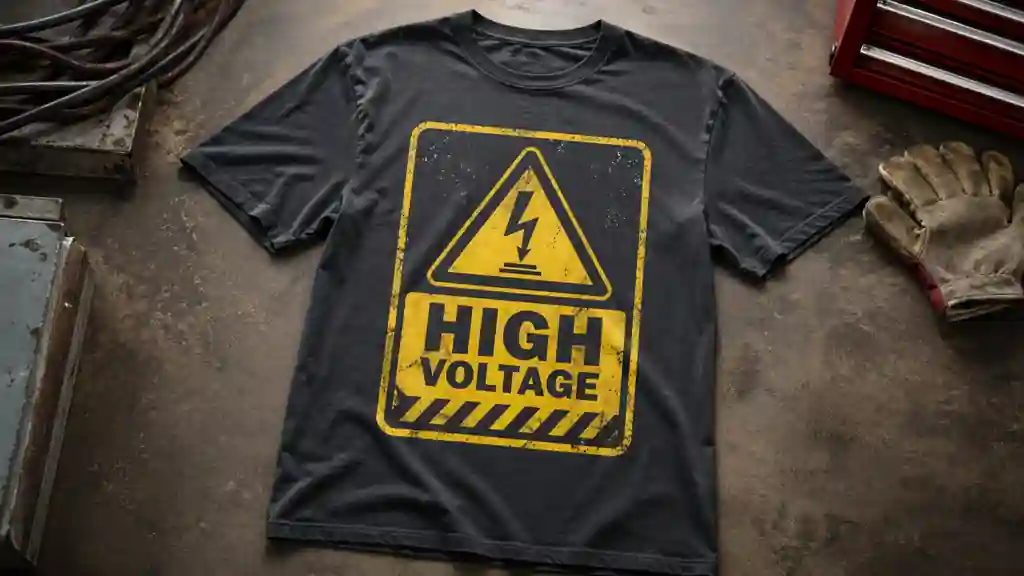
The visual style also works well on apparel. Bold warning text, lightning graphics, caution-style layouts, and industrial shapes create a clear design hierarchy. A high voltage shirt does not need to look complicated. In many cases, the best design is simple, readable, and built around one strong warning-inspired message.
This is where high voltage graphics become more than decoration. They reflect a trade-aware identity. Someone wearing a high voltage shirt may not be making a technical safety statement. They may be showing connection to electrical work, industrial culture, skilled trades, or the bold visual language that surrounds power-related jobs.
For a deeper explanation of the category itself, the guide to high voltage shirts explained expands on how these designs fit into trade apparel and warning-style graphics.
Common Mistakes About High Voltage Meaning
One common mistake is thinking high voltage is just a dramatic phrase. In real electrical contexts, it is serious warning language. It should not be treated like a random design phrase when it appears on signs, equipment, or restricted areas.
Another mistake is assuming every high voltage reference means the same thing. Technical thresholds can vary by standard and setting. A general reader does not need to memorize every number, but they should understand that the label signals caution and controlled handling.
A third mistake is confusing graphic apparel with safety apparel. A high voltage graphic shirt may borrow from warning-sign design, but it is not PPE, not a safety vest, and not a substitute for jobsite protection. This matters because VoltShirts treats high voltage shirts as trade-inspired graphic apparel, not certified safety equipment.
Finally, some people assume high voltage designs only belong to electricians. In reality, the visual language also connects with linemen, industrial workers, maintenance crews, and people who like electrical hazard graphics. The key is keeping the design grounded in trade culture instead of turning it into random shock-value artwork.
How High Voltage Graphics Connect With Trade Culture
High voltage graphics connect with trade culture because they represent risk, skill, and respect for electrical power. Skilled workers understand that power is not just a visual idea. It is part of real environments where attention, training, and discipline matter.
That is why warning-style graphics feel different from generic graphic tees. A lightning bolt, hazard frame, or bold voltage phrase can carry a blue-collar edge because it echoes real industrial signs and work environments. The design feels connected to the trade rather than detached from it.
This connection is important for VoltShirts. The brand focuses on electrician shirts, lineman shirts, and high voltage graphic tees for skilled workers, so high voltage designs belong inside a clear trade apparel system. They are not random novelty graphics. They support the visual identity of people who work around power, understand hazard language, or appreciate industrial design.
For more design-specific ideas, high voltage shirt designs covers how warning layouts, electrical symbols, and industrial graphics can shape stronger apparel concepts.
Recommended High Voltage Shirt Styles
The best high voltage shirt styles are clear, readable, and grounded in warning-inspired design. They should feel bold without looking fake. A good design does not need artificial sparks, glowing wires, or unsafe jobsite scenes to communicate power.
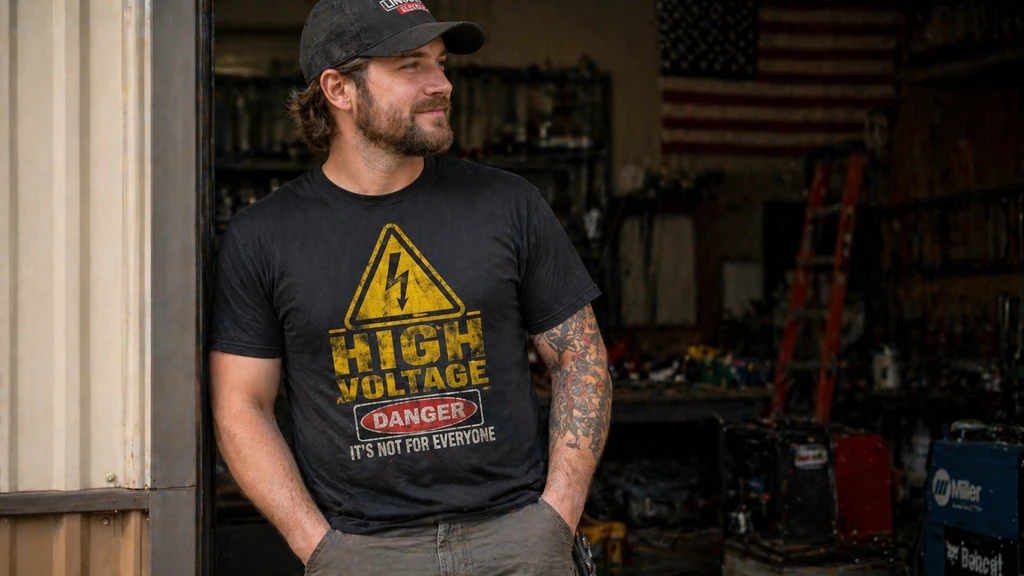
Strong options usually fall into a few practical style directions:
- Warning sign graphics: Best for shoppers who like caution-style layouts and bold hazard language.
- Electrical hazard designs: Best for shirts built around lightning symbols, caution frames, and industrial cues.
- Minimal high voltage text: Best for clean designs that feel direct and wearable.
- Distressed industrial styles: Best for buyers who want a rugged, workwear-inspired look.
If you want a broader category view, industrial safety shirts explains how safety-inspired visuals and jobsite graphic language can influence trade apparel without turning shirts into actual safety gear.
The safest choice is usually a design that is bold but not chaotic. High contrast, readable lettering, and controlled hazard symbolism work better than overloaded graphics. For casual wear, the shirt should still feel like something a skilled worker could actually wear off the job.
Final Takeaway
High voltage meaning depends on context, but the core idea is consistent: it signals electrical power that deserves caution and respect. In real electrical settings, the phrase is warning language. It tells people not to treat the situation casually.
In apparel, high voltage becomes visual identity. The phrase, symbols, and warning-style layouts reflect industrial energy, electrical trade culture, and the bold look of hazard-inspired graphics. The shirt is not safety equipment, but it can still carry the attitude and recognition of the trade.
That is the space VoltShirts focuses on: trade-aware graphic apparel built around electricians, linemen, skilled workers, and high voltage themes that feel connected to real work culture.
Frequently Asked Questions
What does high voltage mean?
High voltage means electrical energy strong enough to create serious hazards if handled incorrectly. The exact threshold varies by technical standard and setting, but in everyday warning language it means caution, distance, and controlled handling are required.
Is high voltage always dangerous?
High voltage should always be treated seriously. The actual danger depends on exposure, system design, distance, training, and protective controls. If something is labeled high voltage, it should never be treated casually or handled without proper knowledge.
What does a high voltage warning sign mean?
A high voltage warning sign tells people that electrical energy in the area or equipment may be dangerous. It usually means access, contact, or handling should be limited to trained people using proper procedures and protection.
Why do high voltage signs use lightning symbols?
Lightning symbols are used because they quickly communicate electricity, power, and danger. They are simple, recognizable, and easy to understand even before someone reads the full warning text.
Are high voltage shirts safety shirts?
No. High voltage shirts are graphic apparel inspired by electrical warning signs, industrial visuals, and skilled trade culture. They are not PPE, not certified safety clothing, and should never replace proper jobsite protective equipment.
More in Workwear & Trade Culture
Browse High Voltage ShirtsHigh Voltage Shirt Designs That Stand Out Without Looking Fake
High voltage shirt designs work best when they look bold, readable, and connected to electrical trade culture. The...
Read articleHigh Voltage Shirts Explained: Meaning, Styles & Buying Guide (2026)
High voltage shirts are graphic tees inspired by real electrical hazard symbols and industrial warning signs. They represent...
Read articleIndustrial Safety Shirts: Styles, Meaning & Buying Guide
Industrial safety shirts are designed around warning-style visuals—bold typography, hazard symbols, and caution-inspired layouts that reflect real industrial...
Read articleLooking for more from this collection?
Browse High Voltage Shirts